


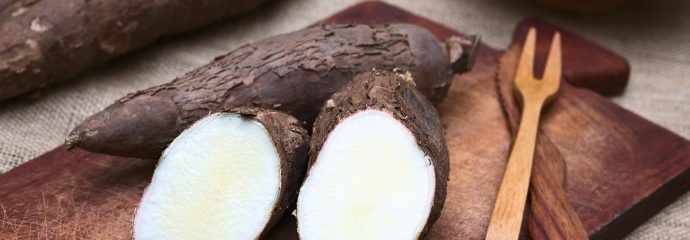
Save Me Some Cassava
Would you guess that a woody shrub named cassava is worth a try? We might peak your interest by telling you cassava is a gluten-free, carb-rich, low-fat food with high doses of vitamin C, B-6, magnesium, and potassium. Native to South America, cassava is a bush-like plant primarily enjoyed in tropical regions, but you might have already tasted cassava in the form of tapioca pudding. Tapioca is a starch extracted from cassava root.  Also known as manioc or yuca root, you also might have enjoyed cassava served as delicious “yuca fries” at a restaurant perhaps offering tasty alternatives to potato side dishes. Additionally, when ground into flour, cassava’s starchy root is a great alternative to wheats and grains. As a warning, however, you may want to leave sweet cassava root preparations to the professionals. Food-safety organizations have warned against the improper preparation of cassava producing cyanide, a deadly compound.
  There are certain boiling and cooking techniques including peeling, slicing, grating, and persistent soaking to filter out dangerous toxins. Refer to professional recipes when preparing cassava at home, find processed cassava flour in grocery or health food stores, or simply purchase cooked cassava dishes from trusted delis and restaurants. When done right, cassava can be both a delicious dish and a nutritious addition to your diet.
Have you ever cooked cassava at home, or do you enjoy it at certain restaurants? Tell our team at Eat, Heal, Travel via our Twitter or Facebook page.
Back to Blog